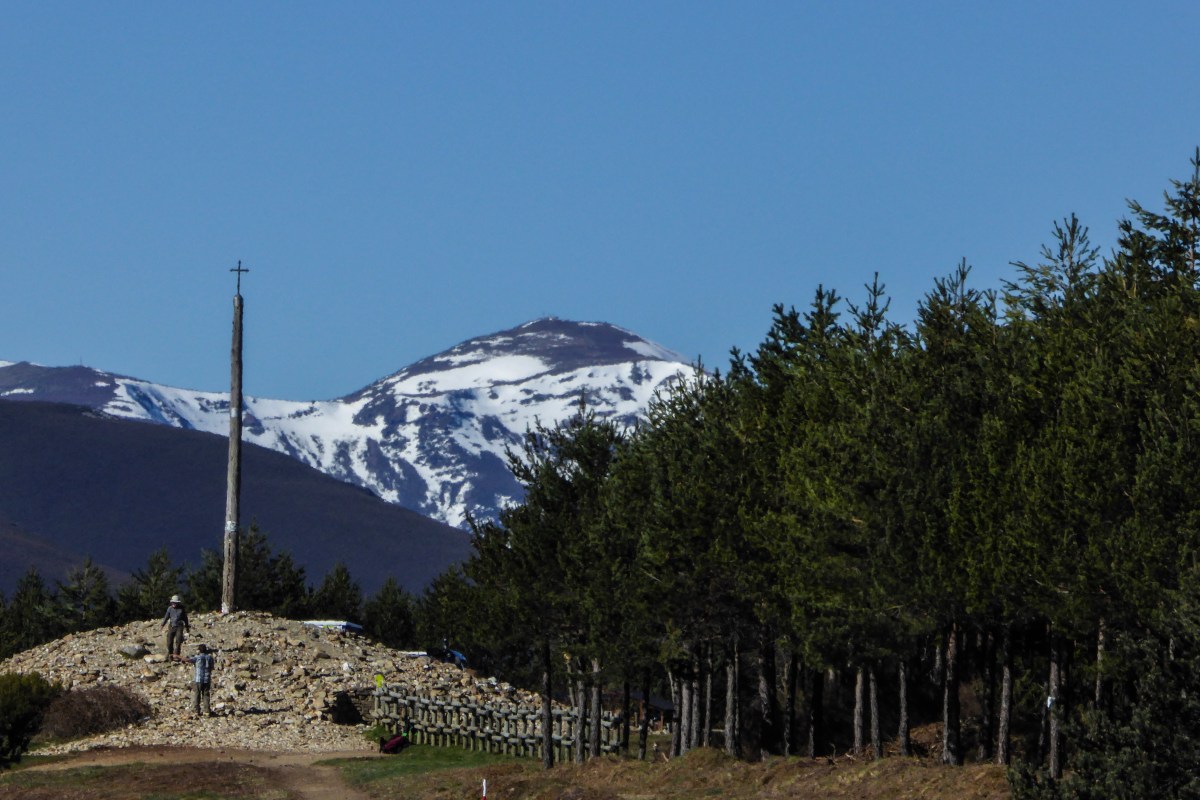
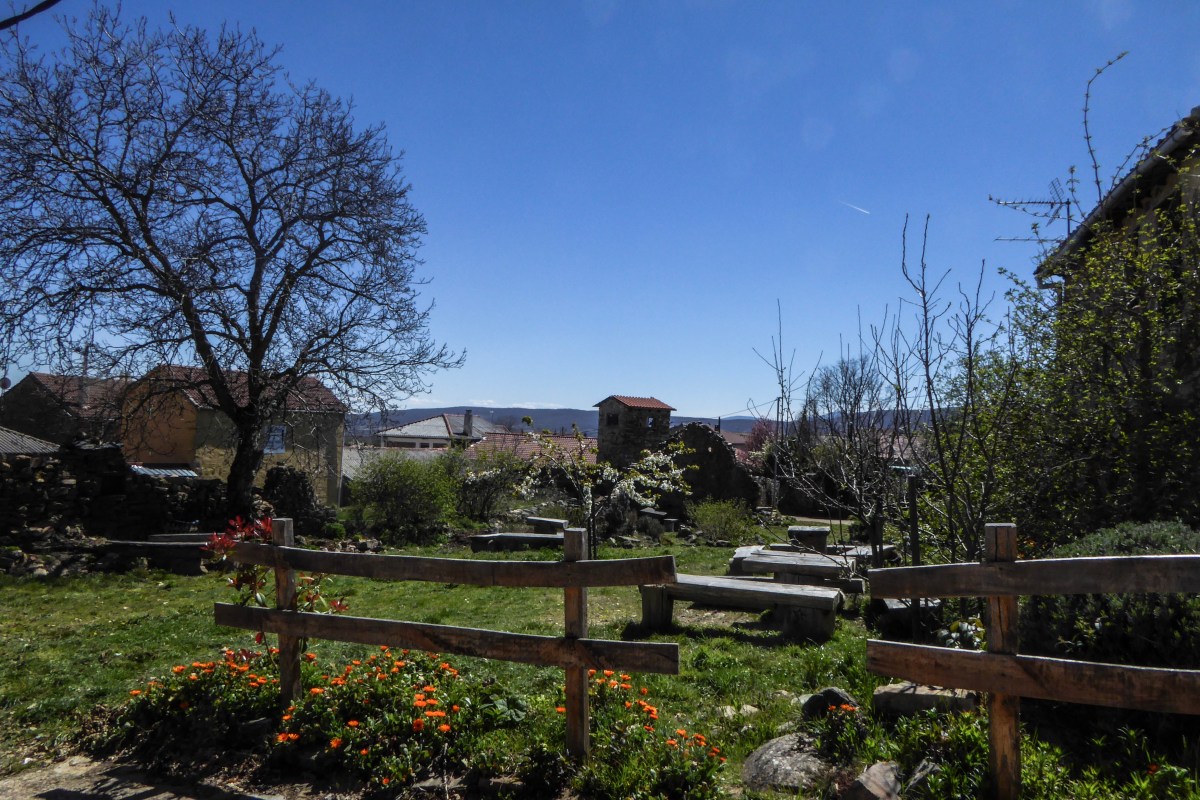
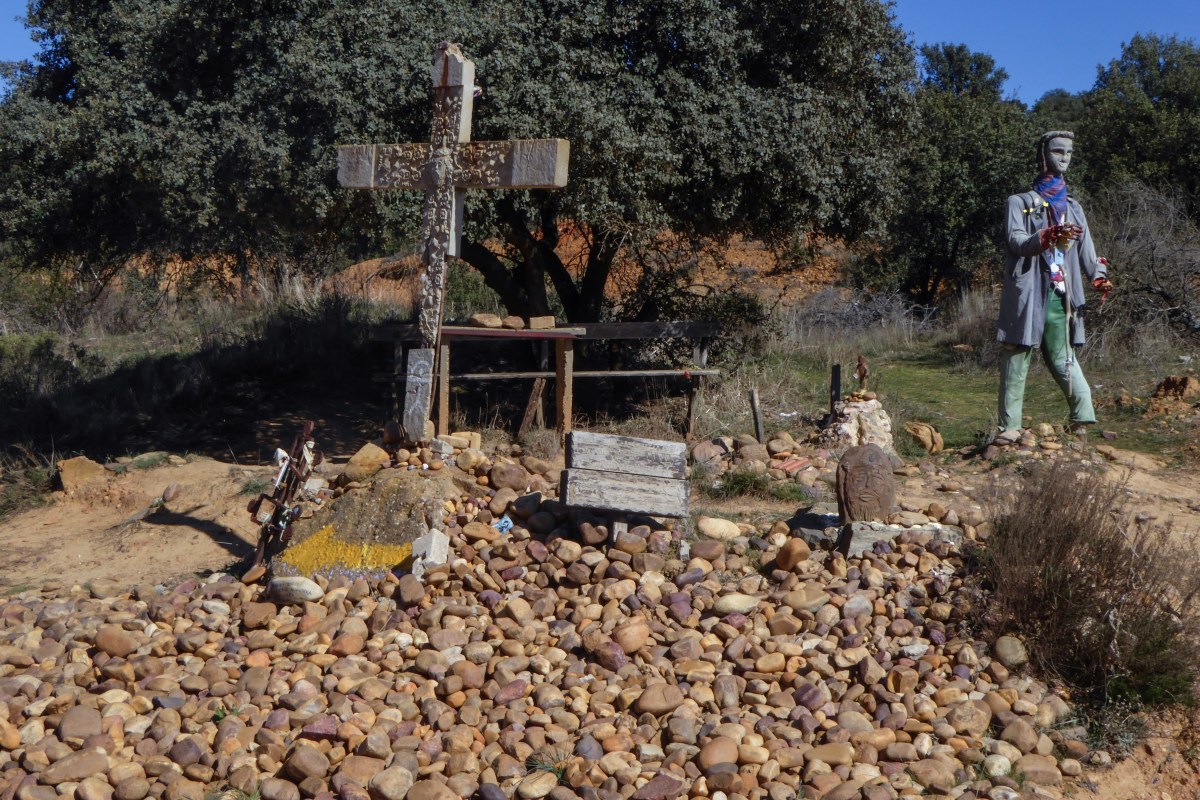
It was cold in the morning, and we walked through a forest with frost still on the ground. We hiked toward the high peaks of El Camino, Cruz de Ferro, 1,505m/4937ft, and Alto Altar, 1,515m/4970ft. It was an easy climb because we had been gradually climbing since we left the Meseta a few days prior. The hike to the summit was easy and steady. We reached the Cruz de Ferro, which is one of the most important symbols of El Camino. The exact age of the cross is unknown, but pilgrims have dropped a stone at its base as a symbol of letting go of the burdens that we carry in life. A couple kilometers after, we walked through Manjarín, an abandoned village from around the 12th century that used to be a hospital and base for the Knights Templar. There are still some buildings and a single resident who takes care of the pilgrims.
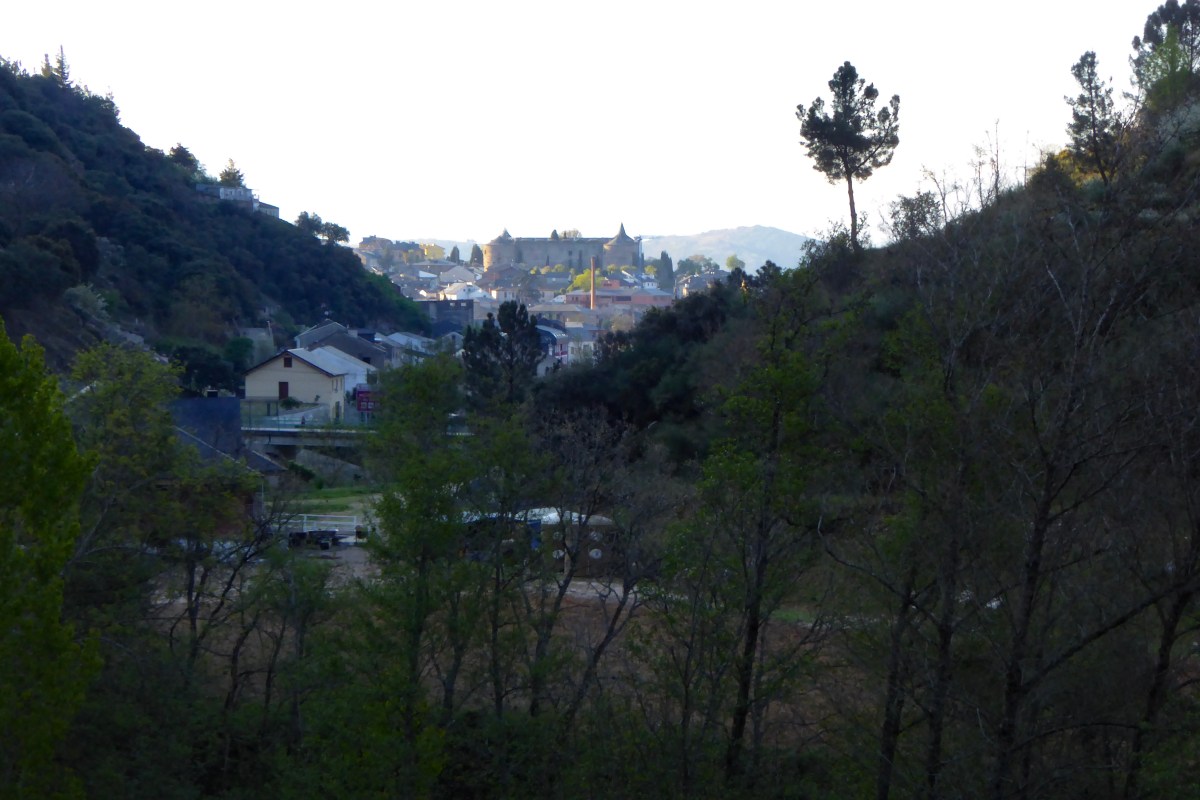
But everything that goes up comes down. After beautiful valley views, we started our descent, about 905m/2969ft in 10km/6m. Most of the area was loose rocks, some areas we walked on the freeway, it wasn’t good at all for our knees and feet.
















 TrekTok