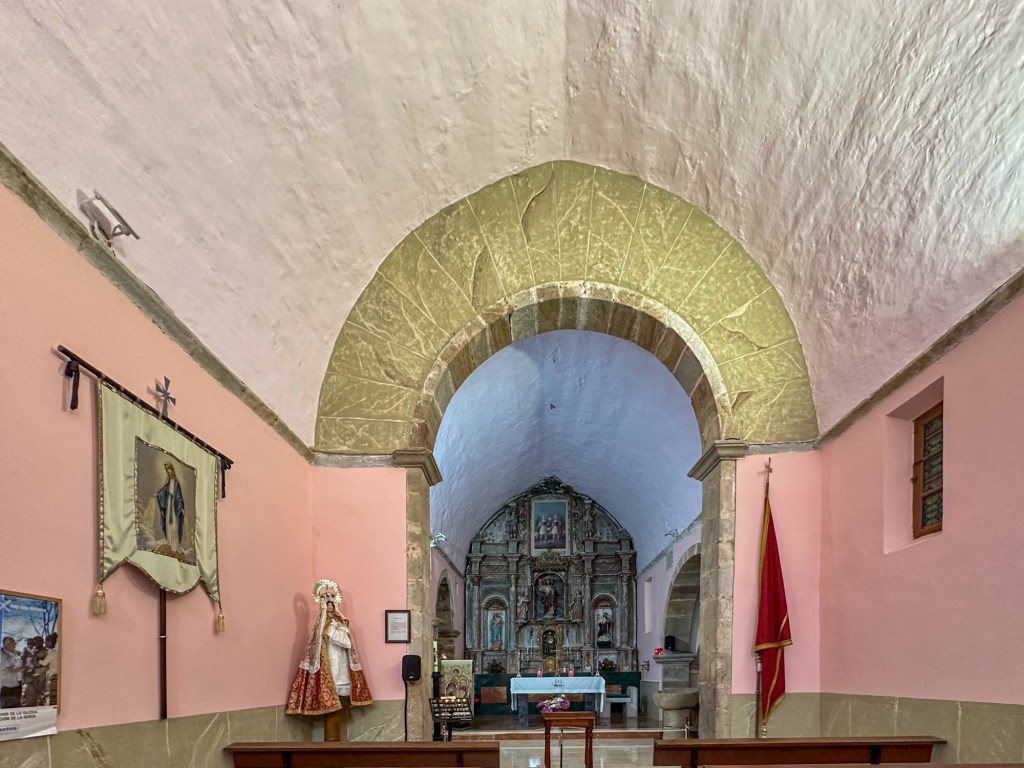
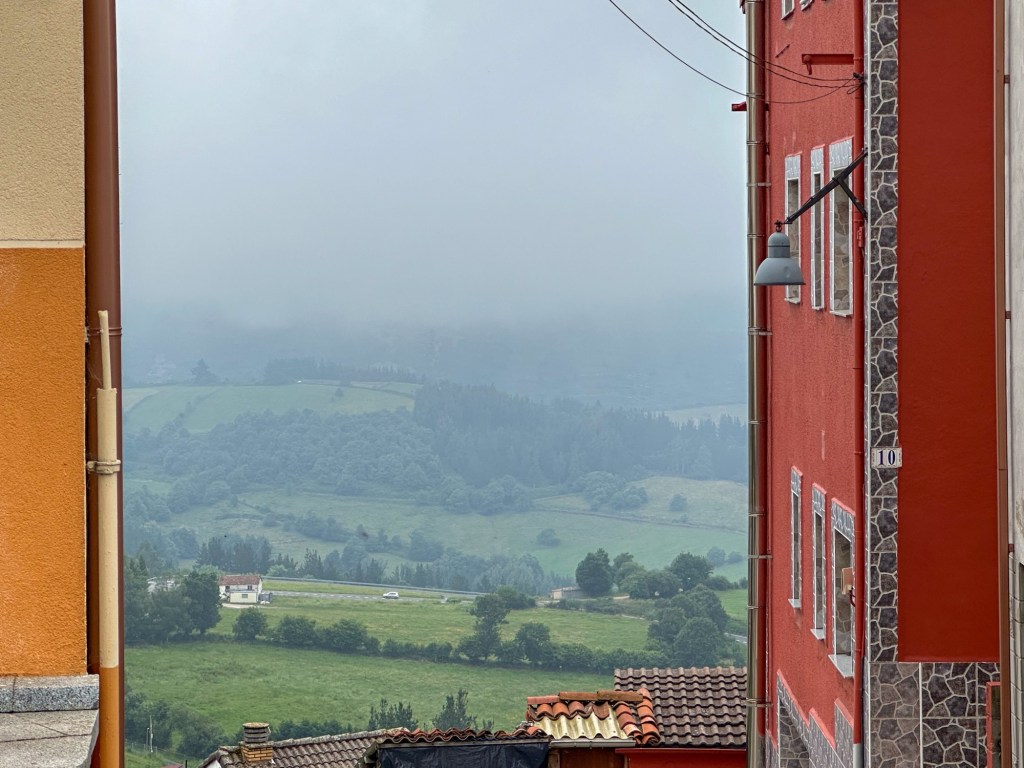
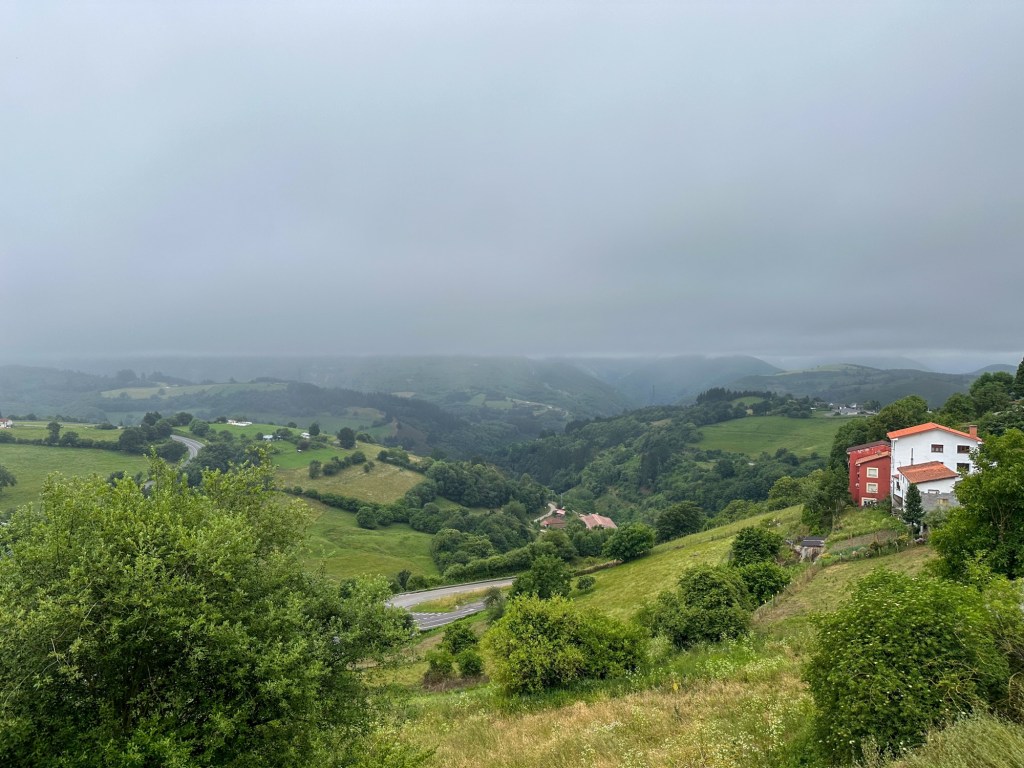
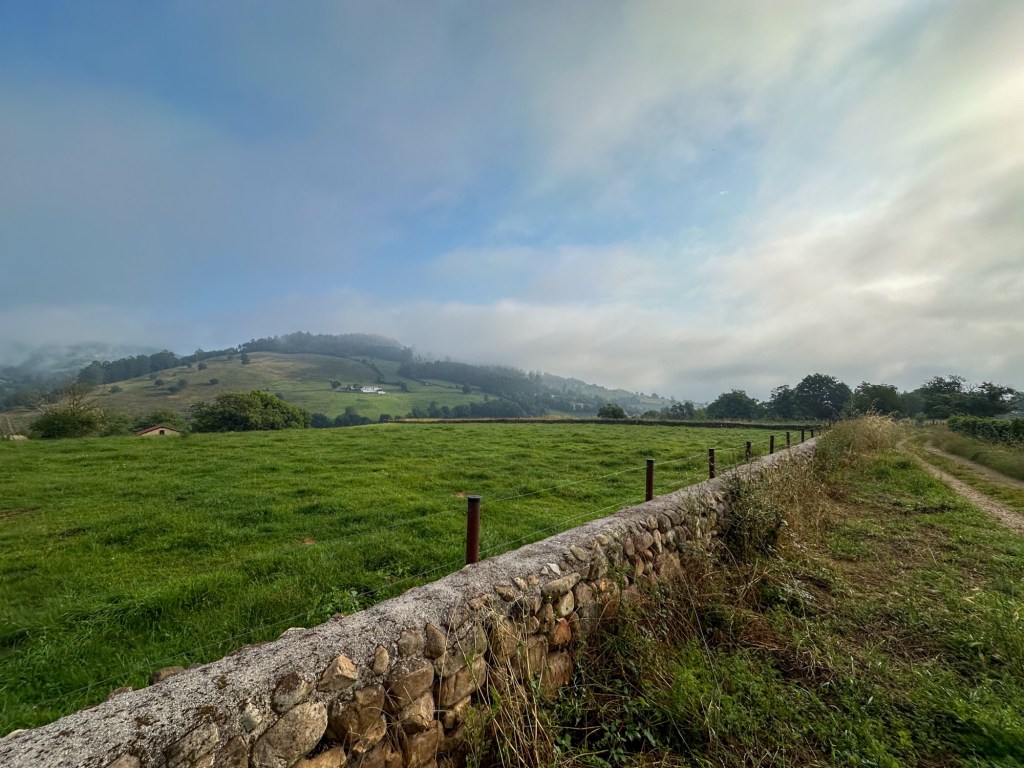
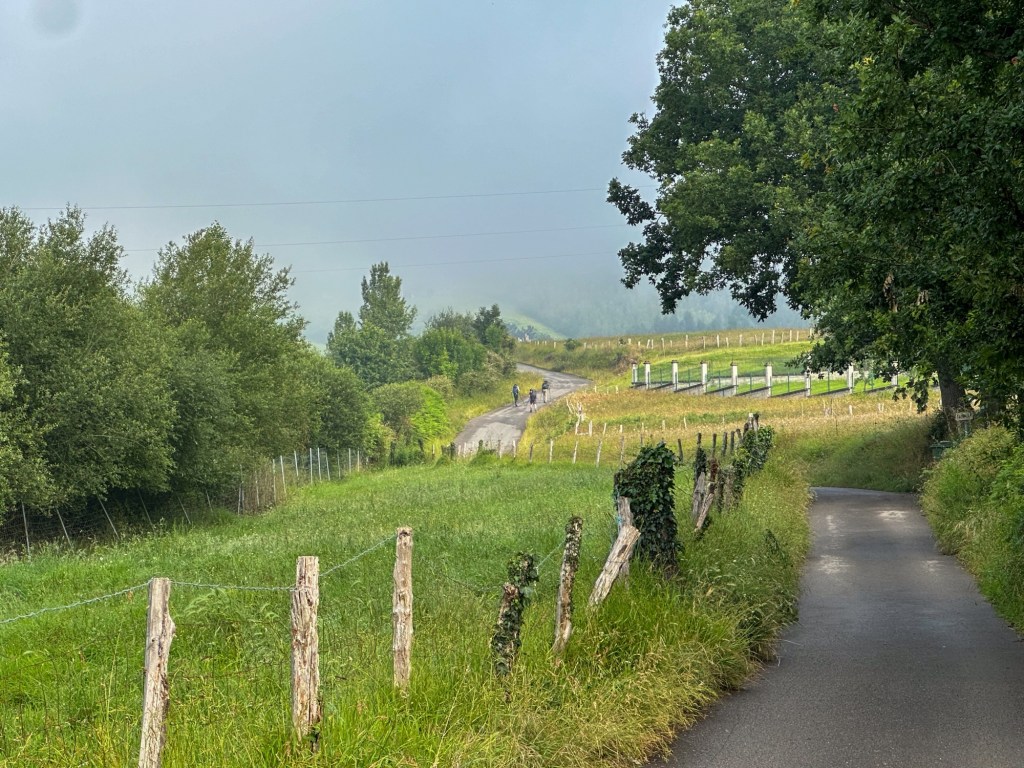
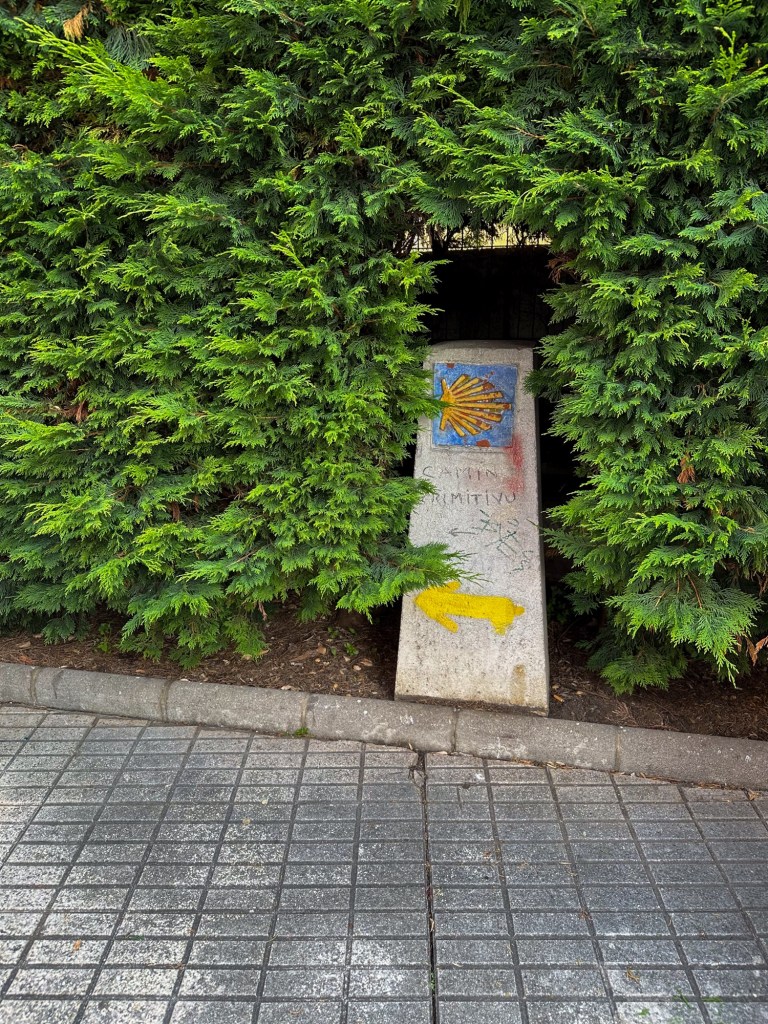
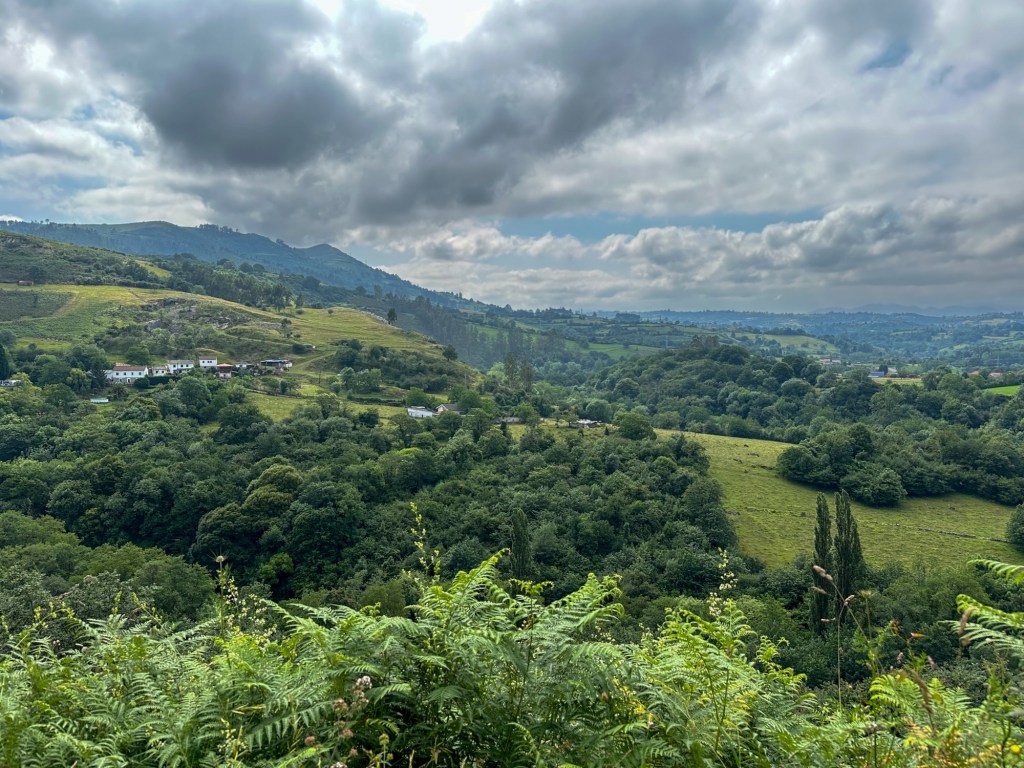
Today, we did the third stage of el Camino Primitivo, a 22 km (13.67 miles) hike from Salas to Tineo. The route took us through picturesque woodlands and muddy fields. Along the way, we come across la Ermita de San Roque, a stunning example of Romanesque architecture dating back to the 12th century.
Today has been the most challenging day because of the weather. The temperature was 75°F and 95% humidity. The weather in Asturias is very humid; it reminds me of the weather from Yucatan, that feeling of heat coming from the ground before rain.
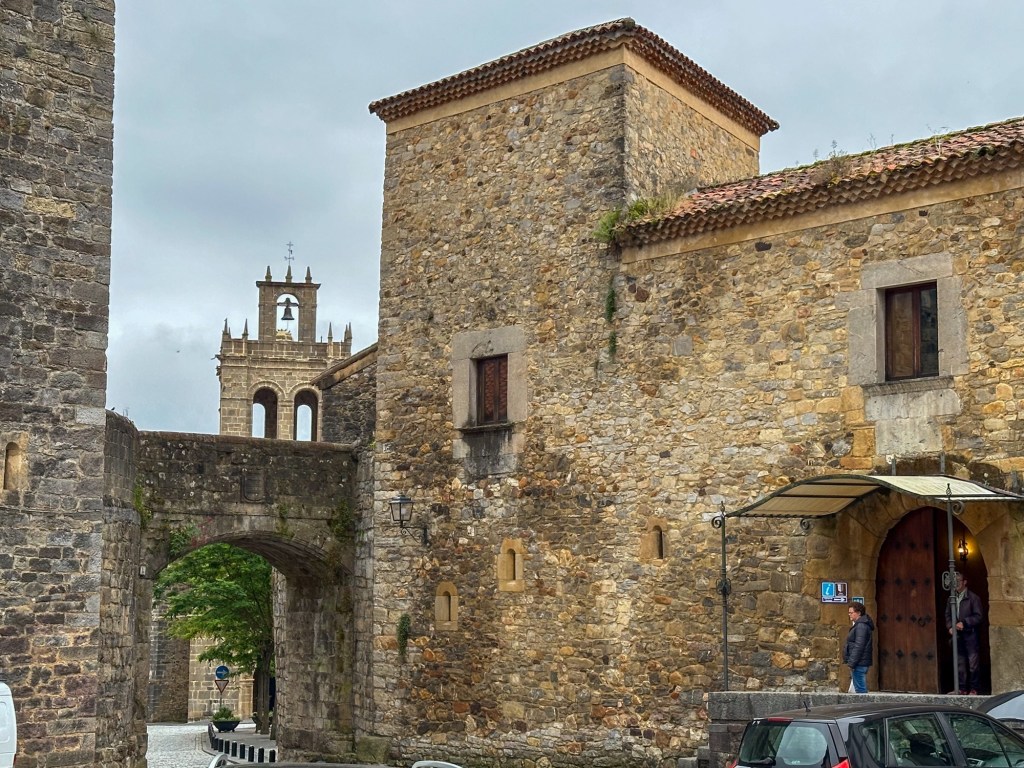
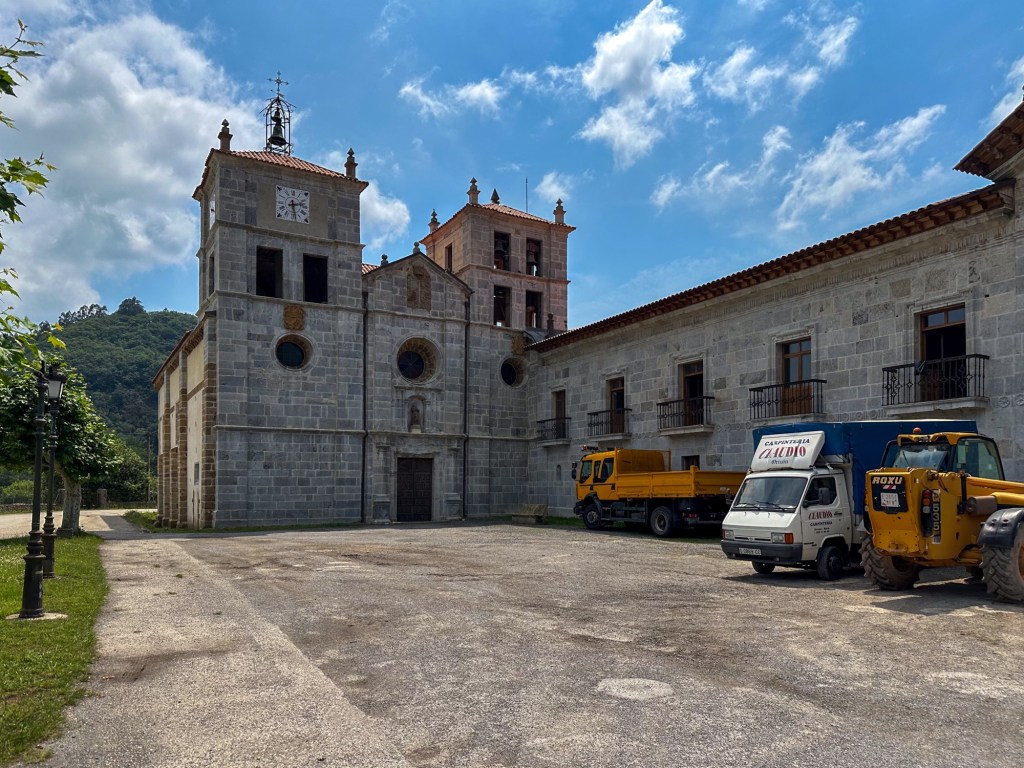
On our hike today, we walked through the forest, but we did a lot of walking on asphalt, so it was challenging to hike with the heat coming from the ground. We also saw the historic San Salvador De Cornellana Monastery, which has a rich history dating back to its foundation in 1024.
According to local legend, a little girl from a prominent family once got lost in the forest, and a female bear took care of her until she was found. In gratitude for this survival miracle, the girl’s family founded a monastery and engraved the image of the female bear nursing the girl on the main door.
Contemplating structures that have stood for over a millennium prompts us to reflect on the brevity of our lives on Earth.
The first stage of El Camino Primitivo is 28 km/17 miles.
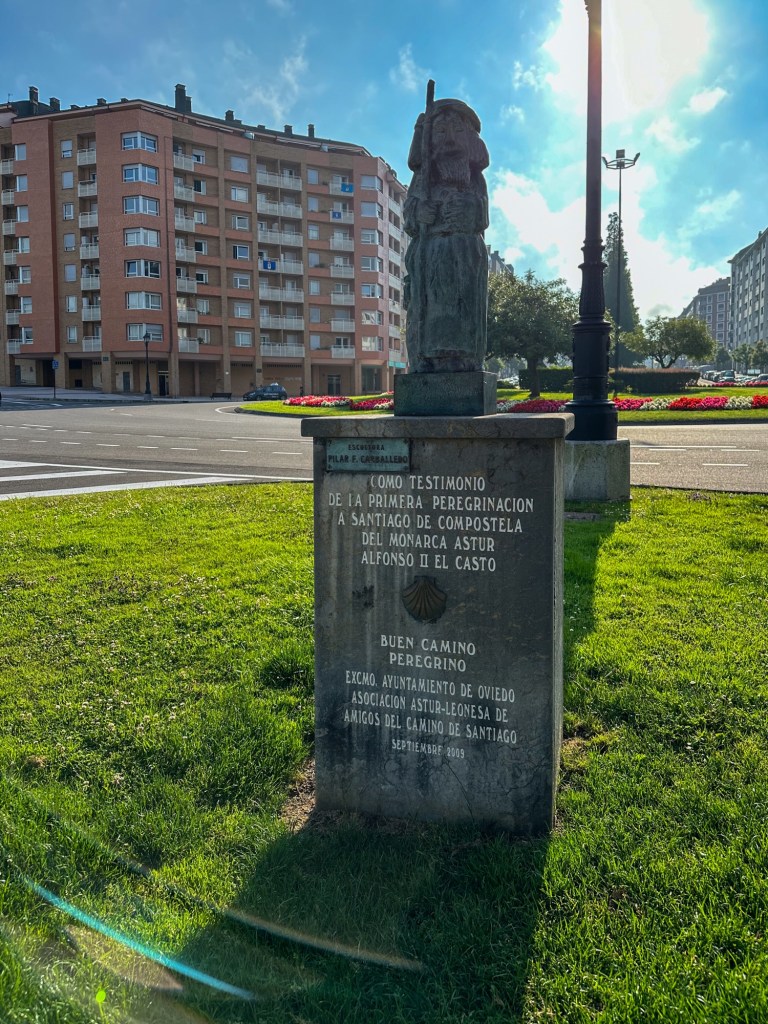
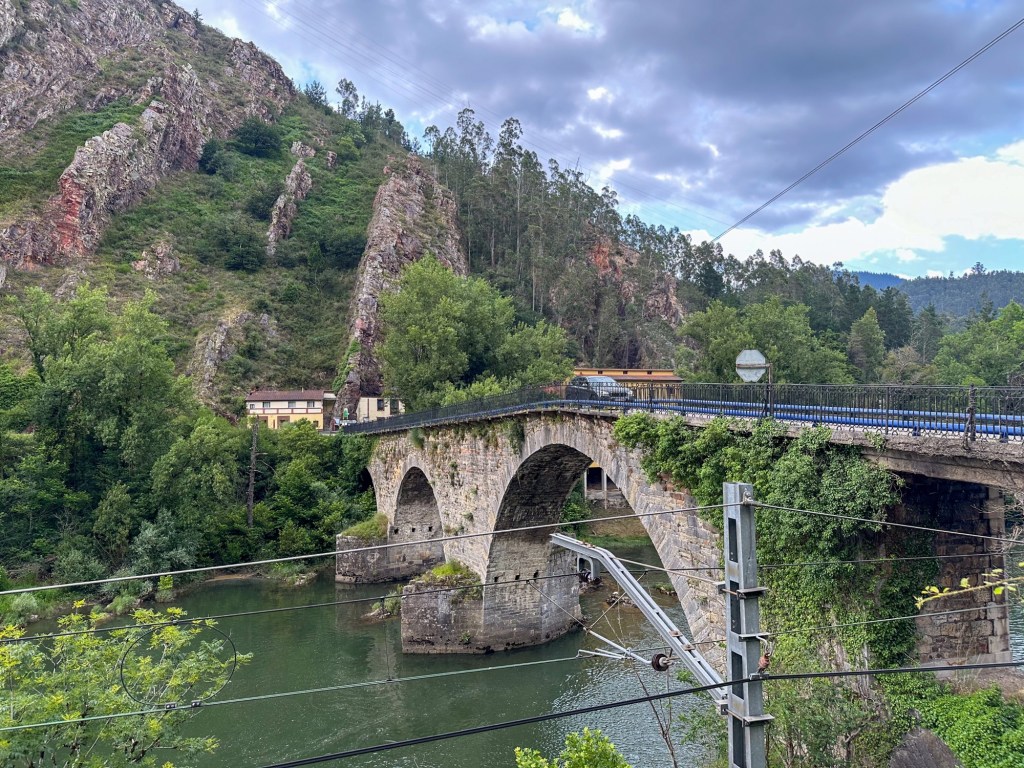
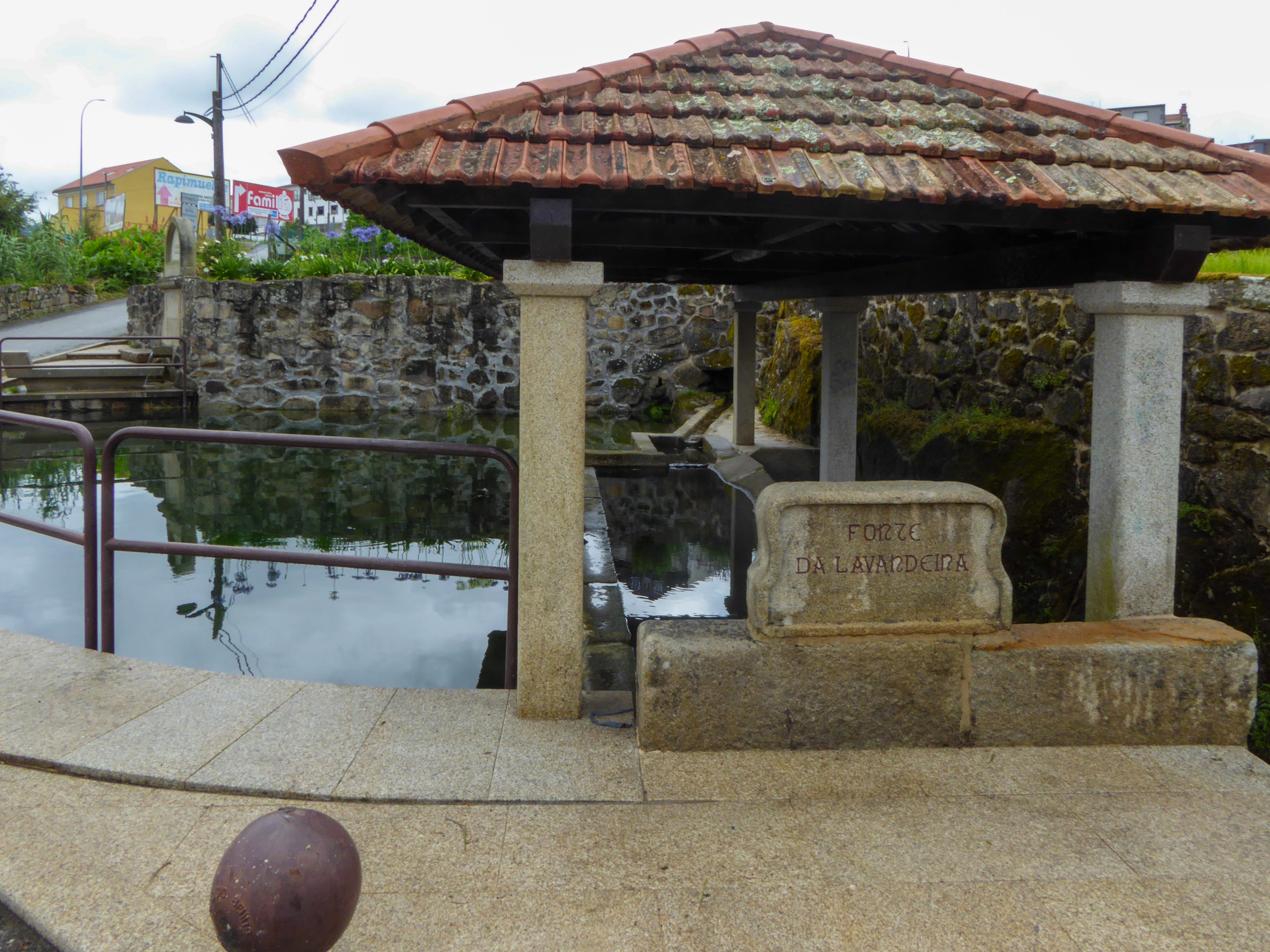
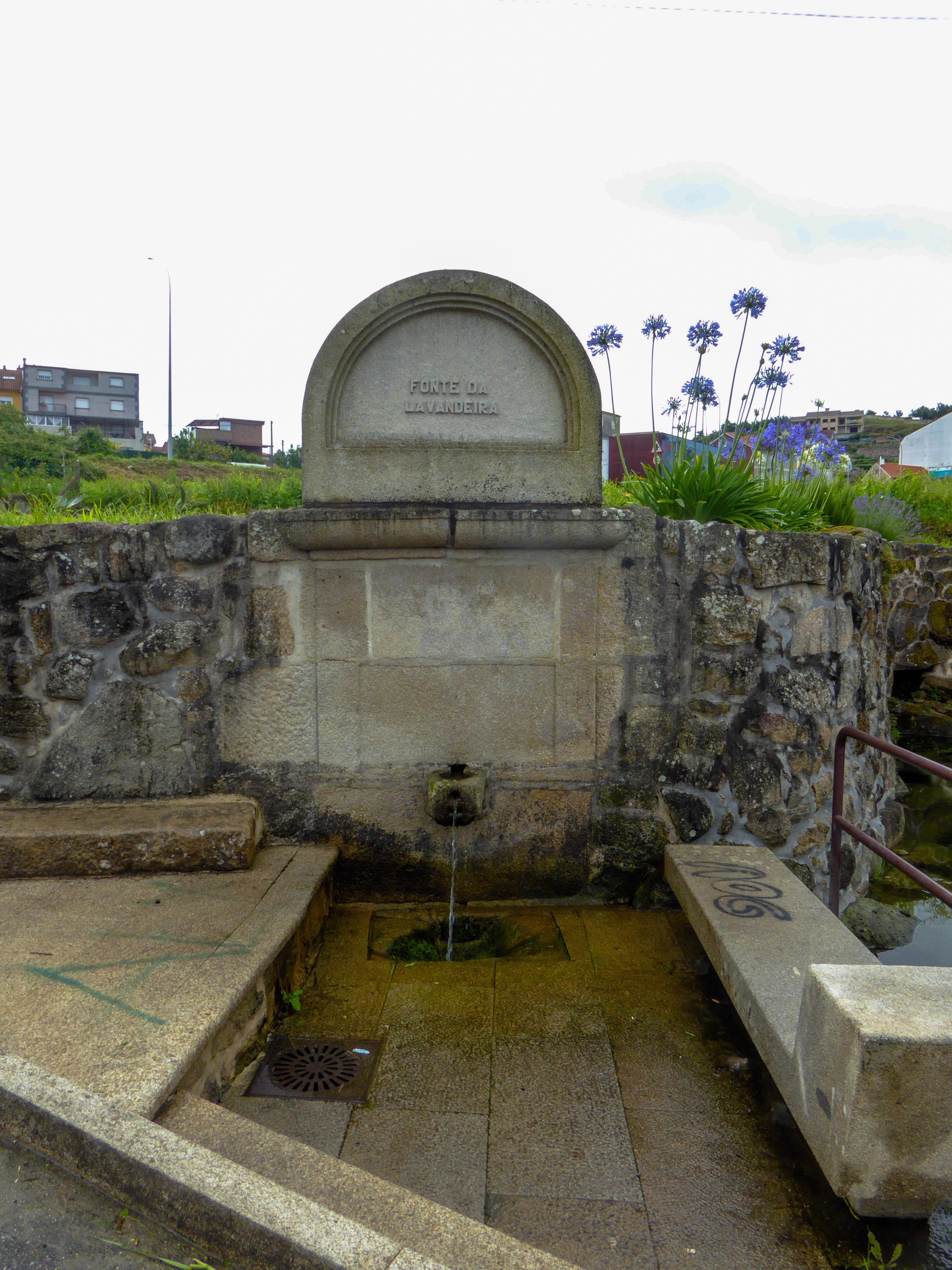
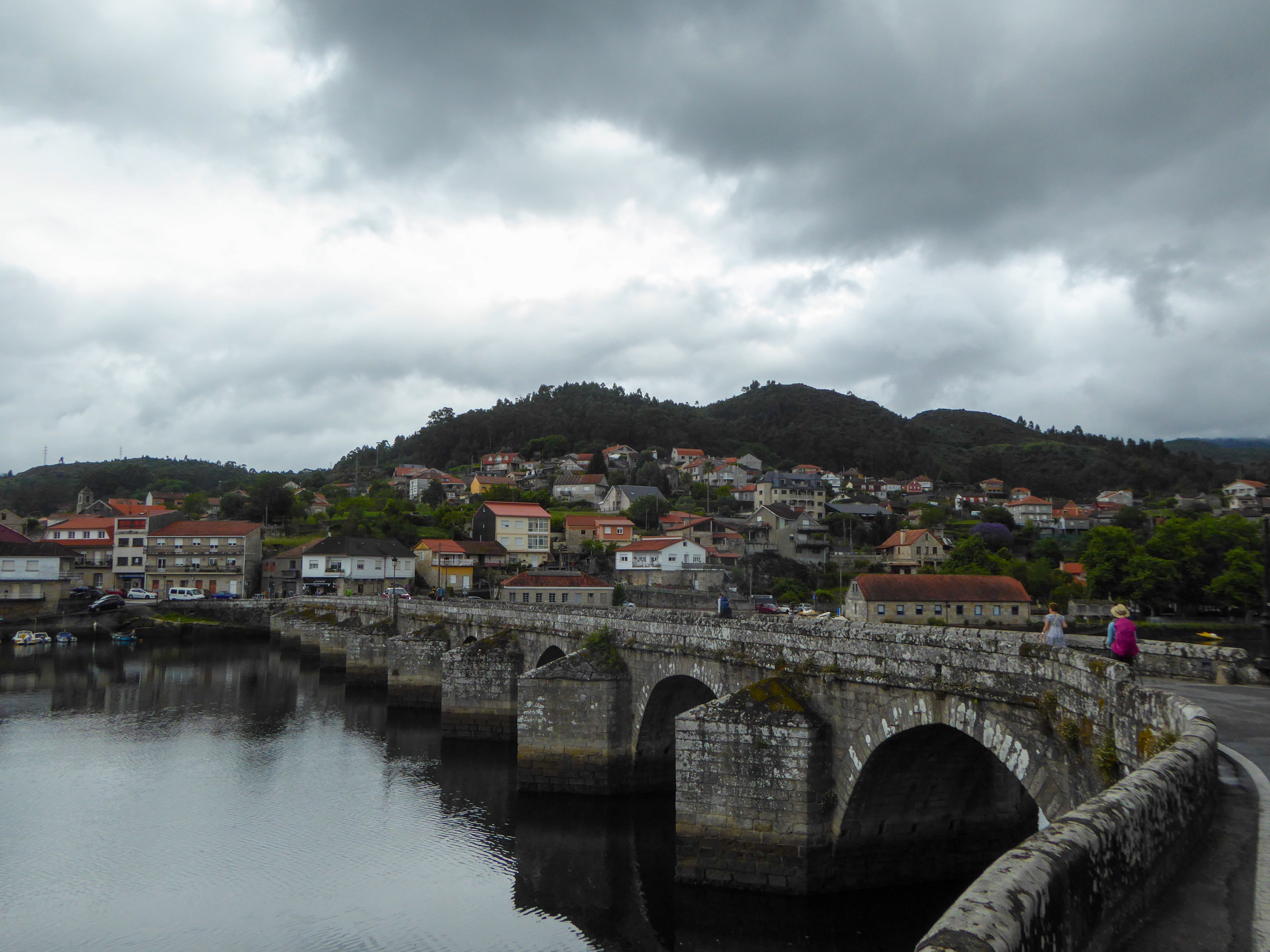
We were very excited to start the journey to Santiago. After we left Oviedo, we entered the forest. Most of the walk was easy. We walked through farms, saw several town washhouses, and crossed ancient bridges, including the bridge Peñaflor over río Nalon, built in the 12th century, where the Spanish and Napoleon’s troops fought during the war. Also, we encountered the remains of a Roman house.
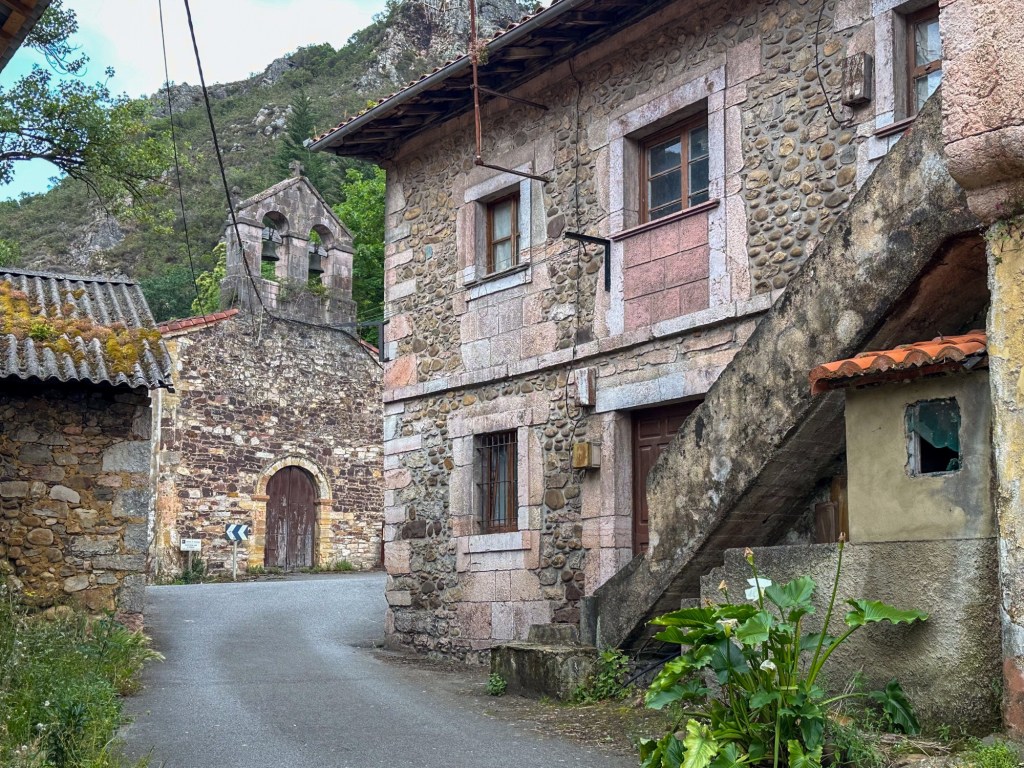
As we walked through the villages today, the number of abandoned houses struck us, each a silent testament to the passage of time.
We reached the point that walking 13.5 miles in less than five hours is not bad at all. Don’t take me wrong; After ten days of walking between Portugal and Spain, we have minor injuries in the feet or knees, and the whole body is sore. But we are in the rhythm of walking, eating, and open to discovering whatever it is in the next miles.
Doing El Camino de Santiago is not only developing physical endurance but also mental endurance.
Today we walked in the rain. It was a warm rain and them humid, like in the tropics.
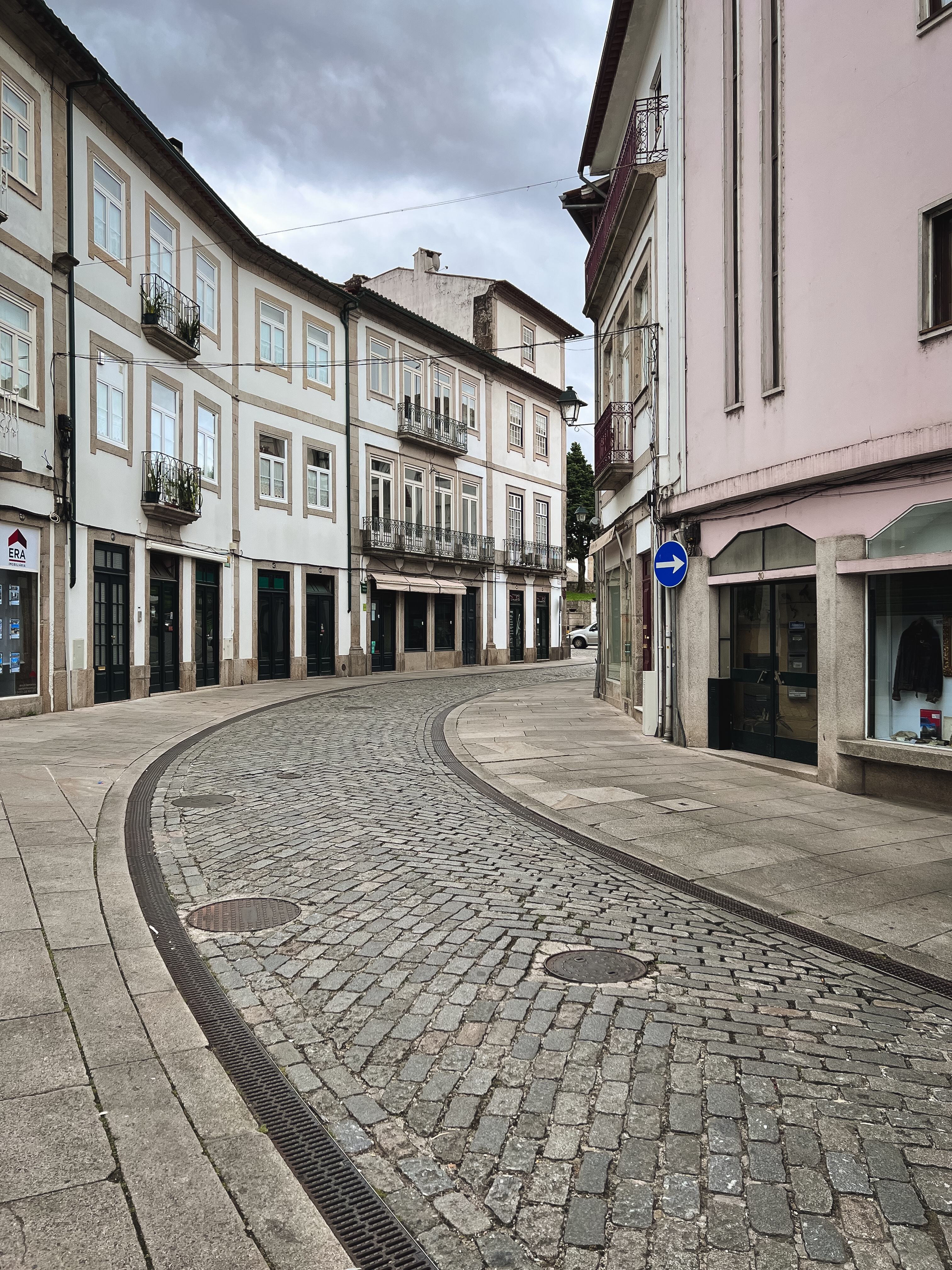
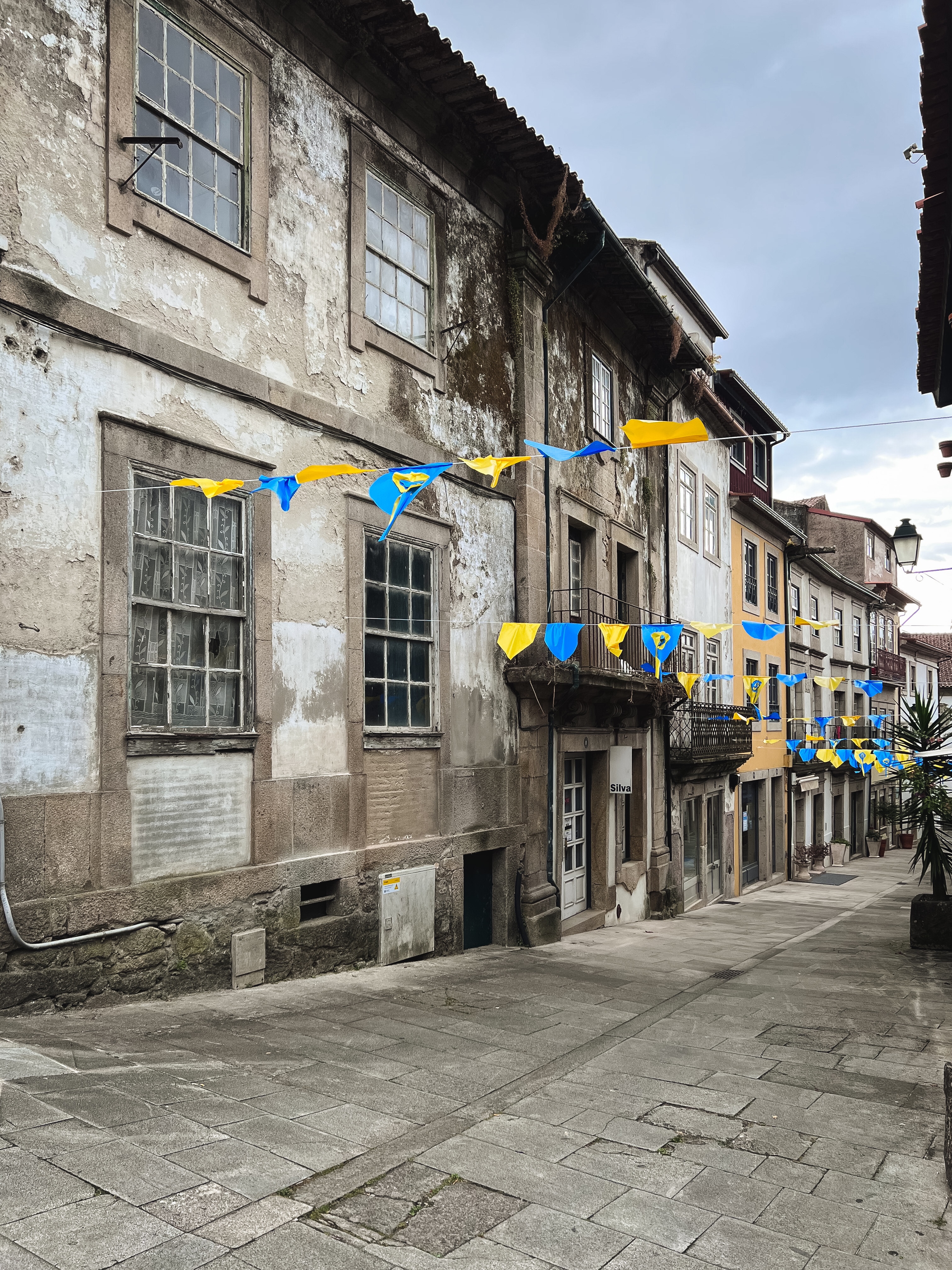
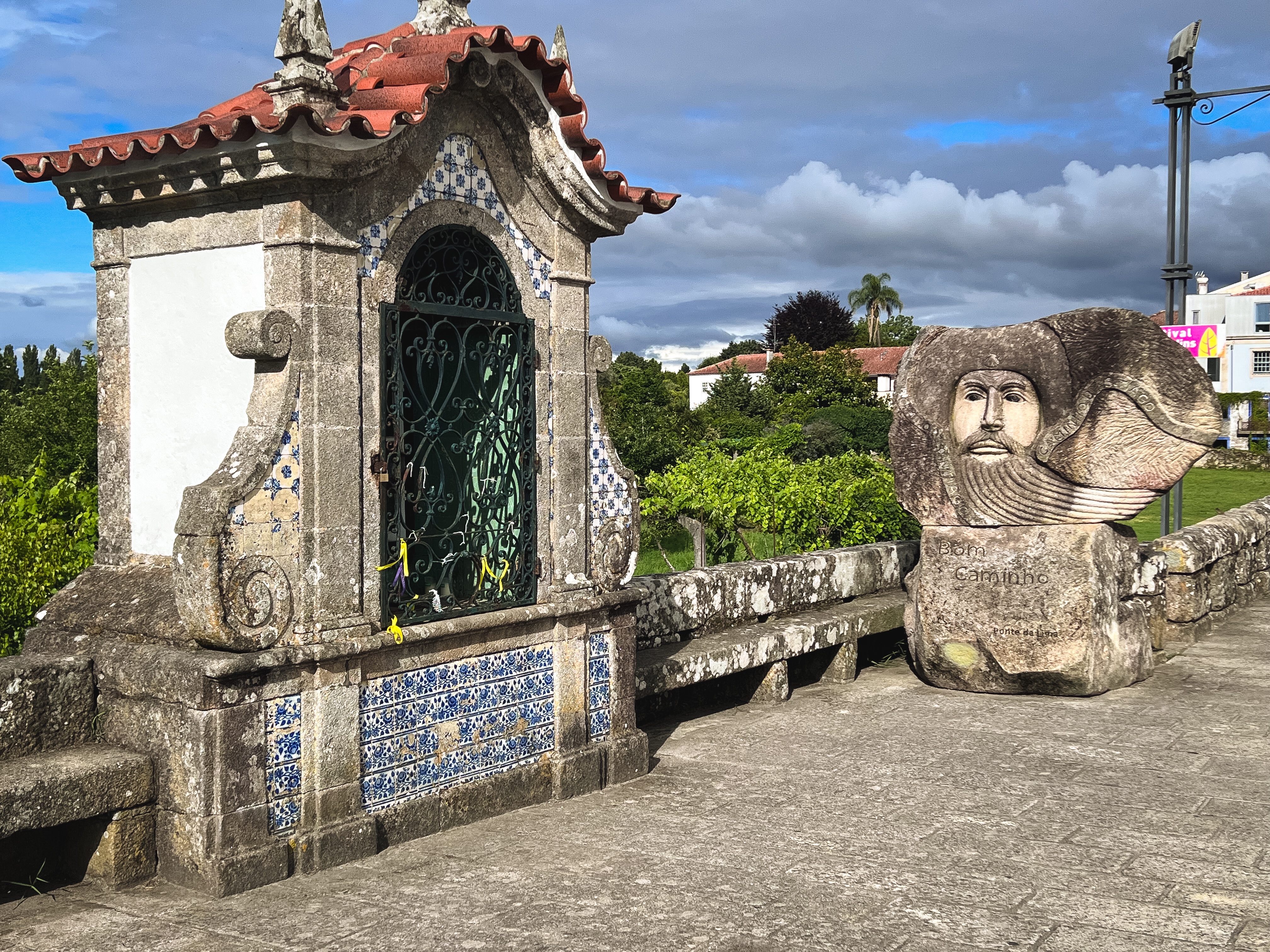
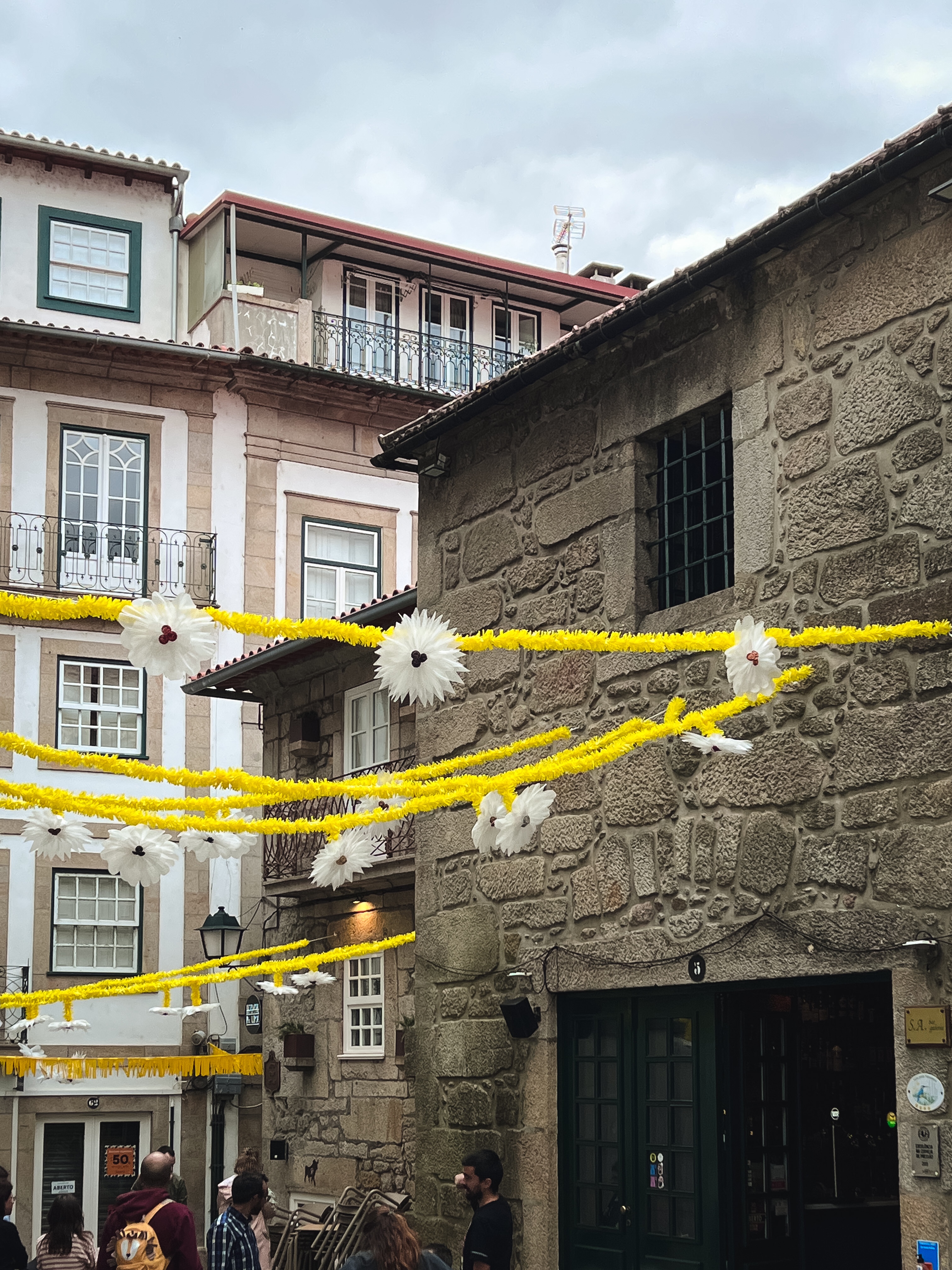
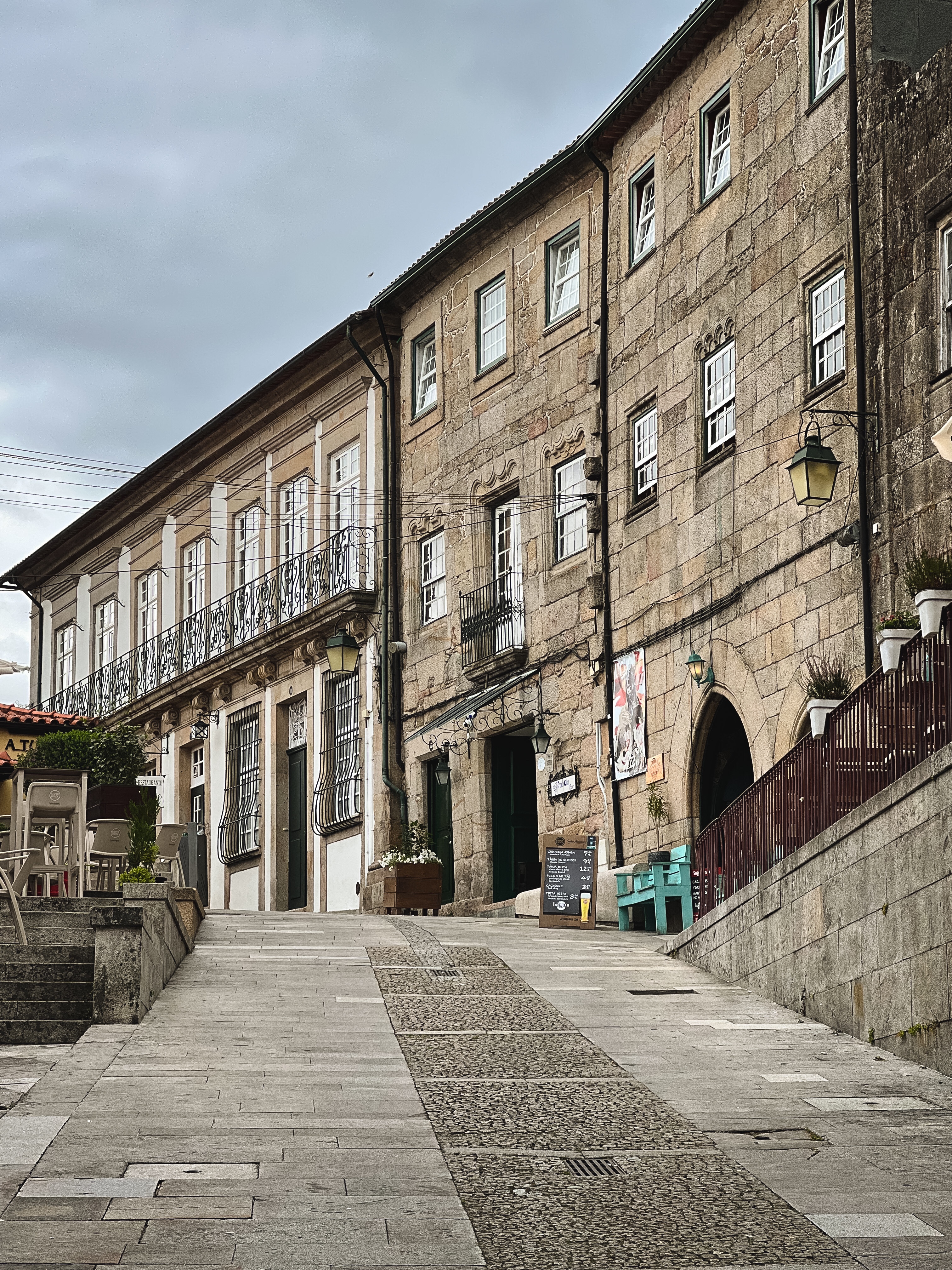
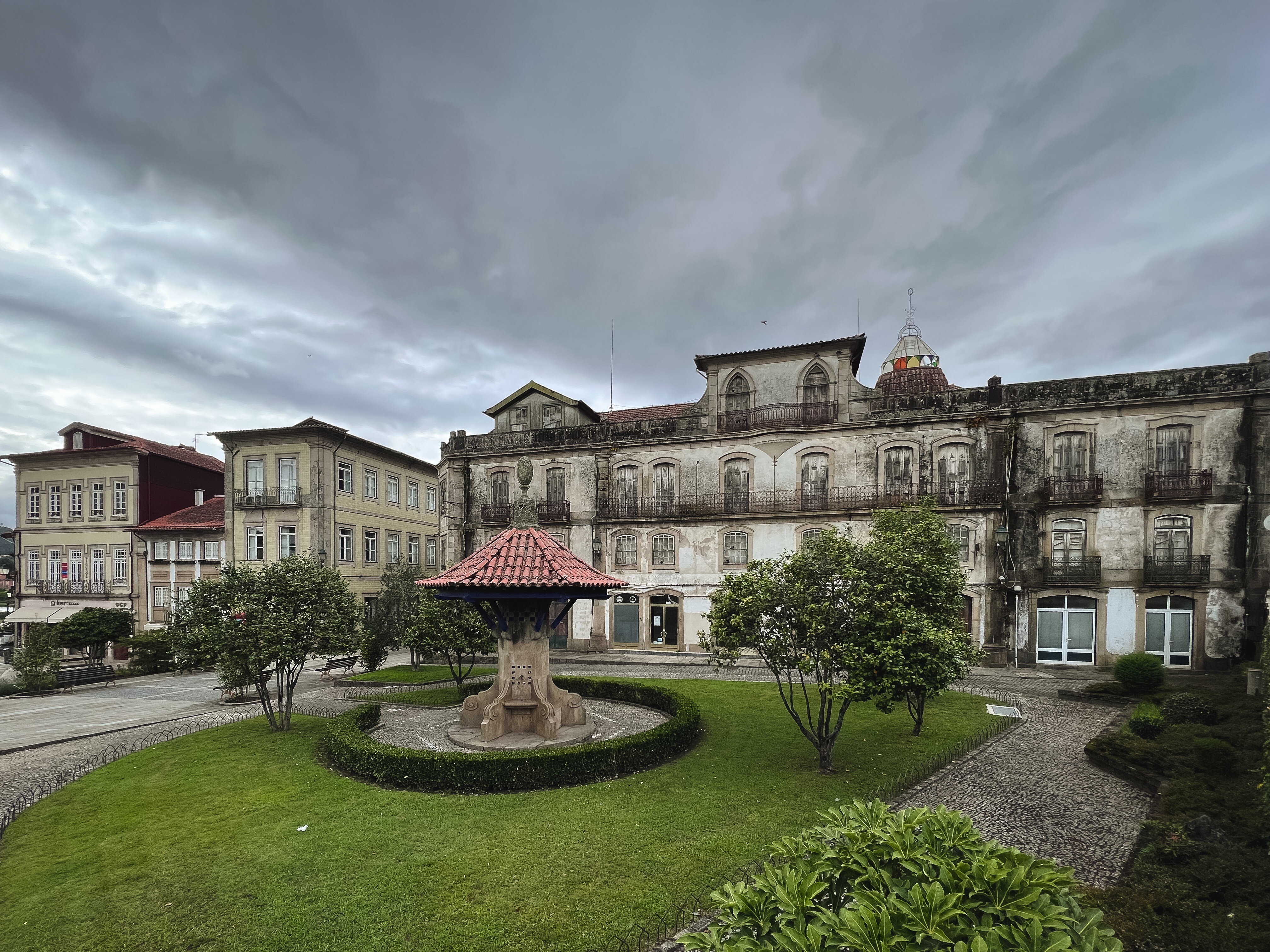
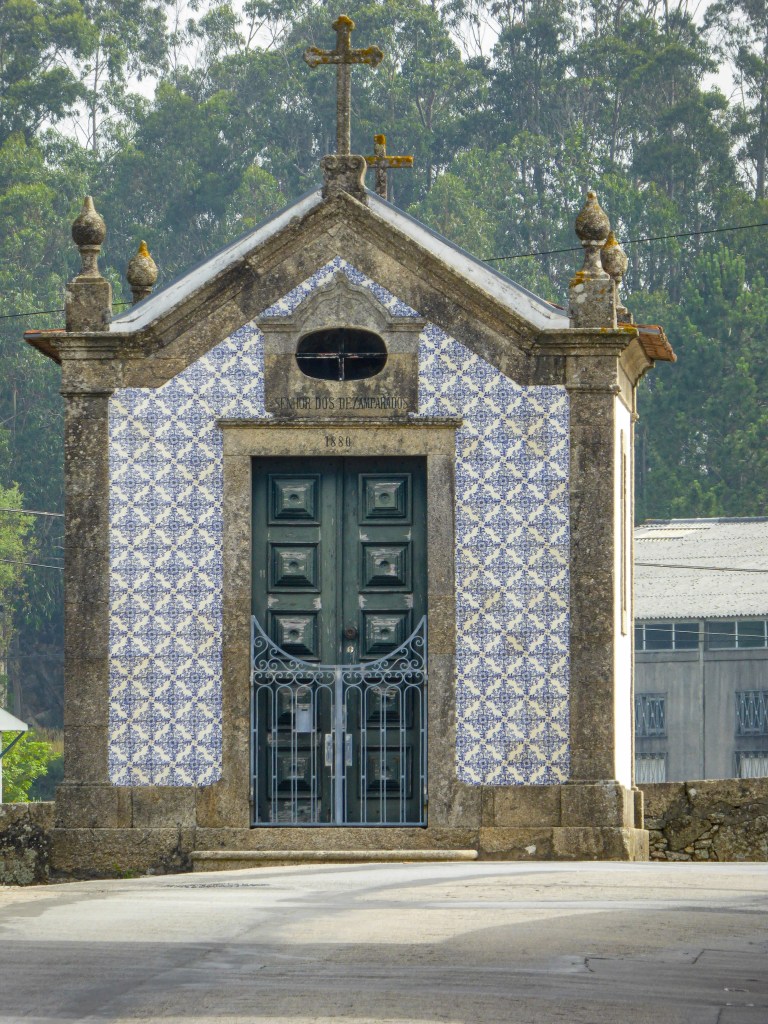
We arrived at Ponte de Lima, a city founded during the Roman times. There was a market at the entrance of the city and a festival. The city is well preserved and has beautiful architecture.
This morning we split into two groups because we decided to take the central path to Santiago and not continue along the coast. Jeremy walked the eight miles across the city of Vila do Conde, and the girls and I took a taxi to the edge of the town to continue on el Camino Central. Jeremy walked 18 miles and we did 11.5 miles.
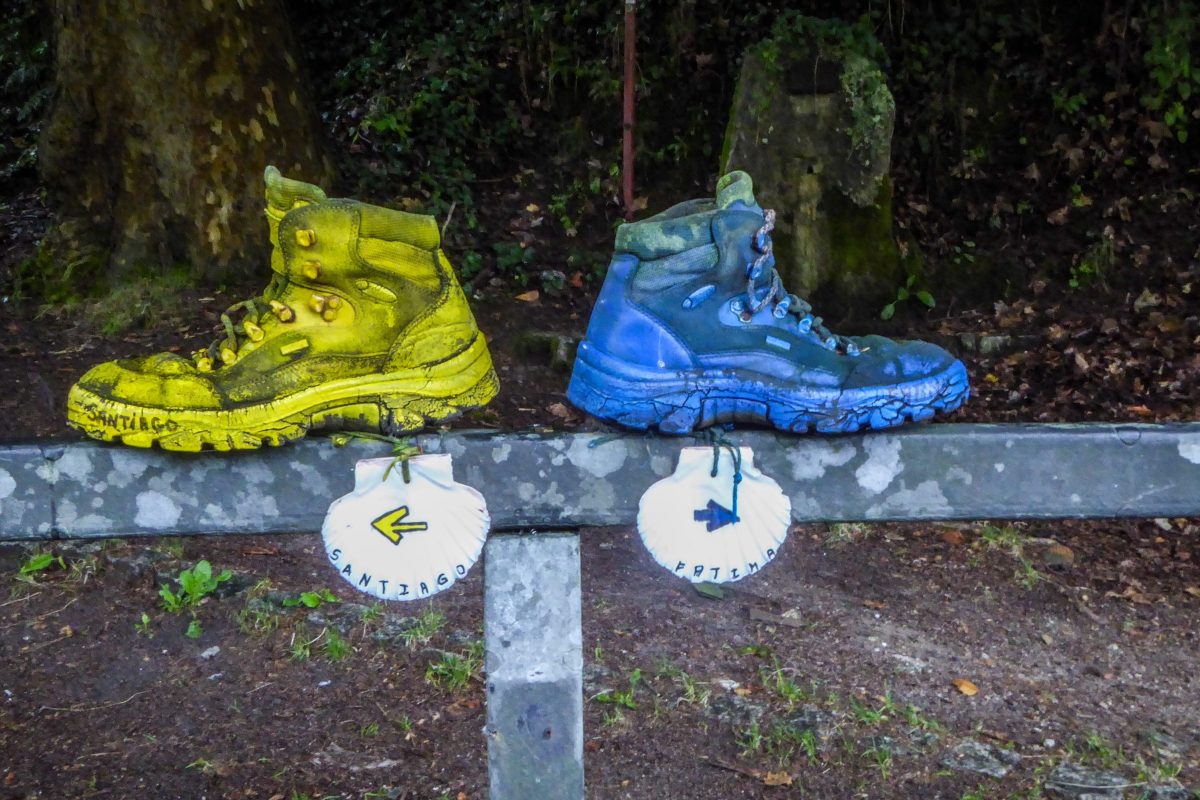
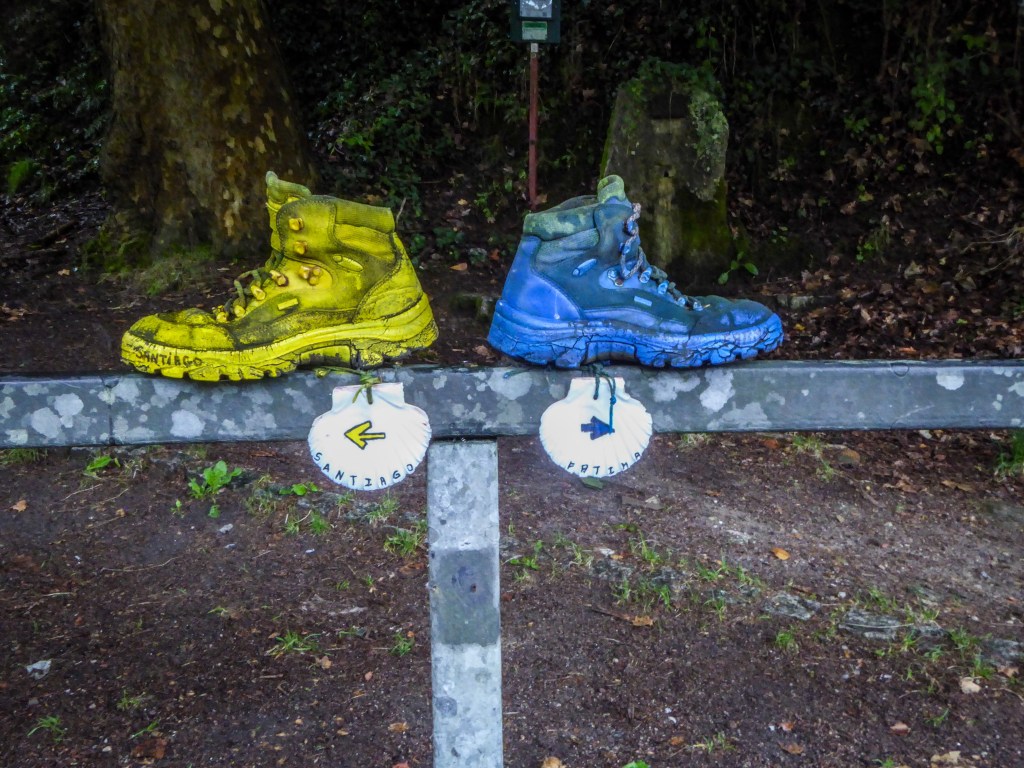
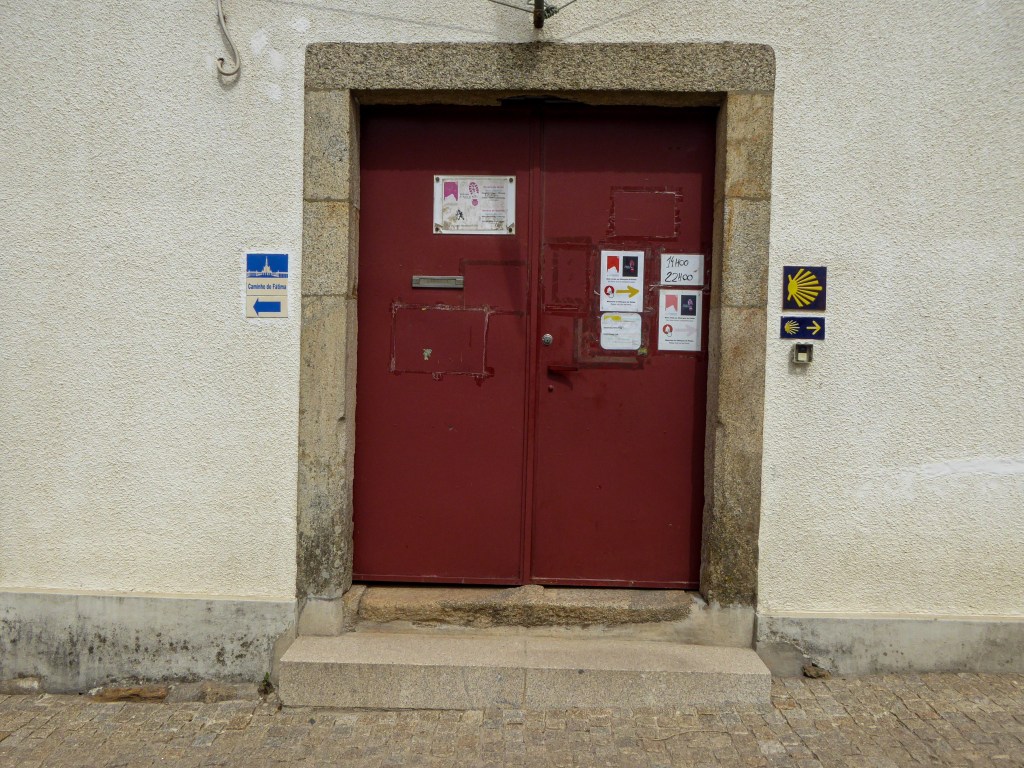
Along the way, we saw blue arrows that indicate the way to El Santuario de Fatima. Some people combined both pilgrimages and walk to Santiago De Compostela and Santuario De Fatima.
I was looking for more information on the web about El Camino de Santiago. I found this funny article of 20 truths about El Camino de Santiago. I just wanted to share it here.
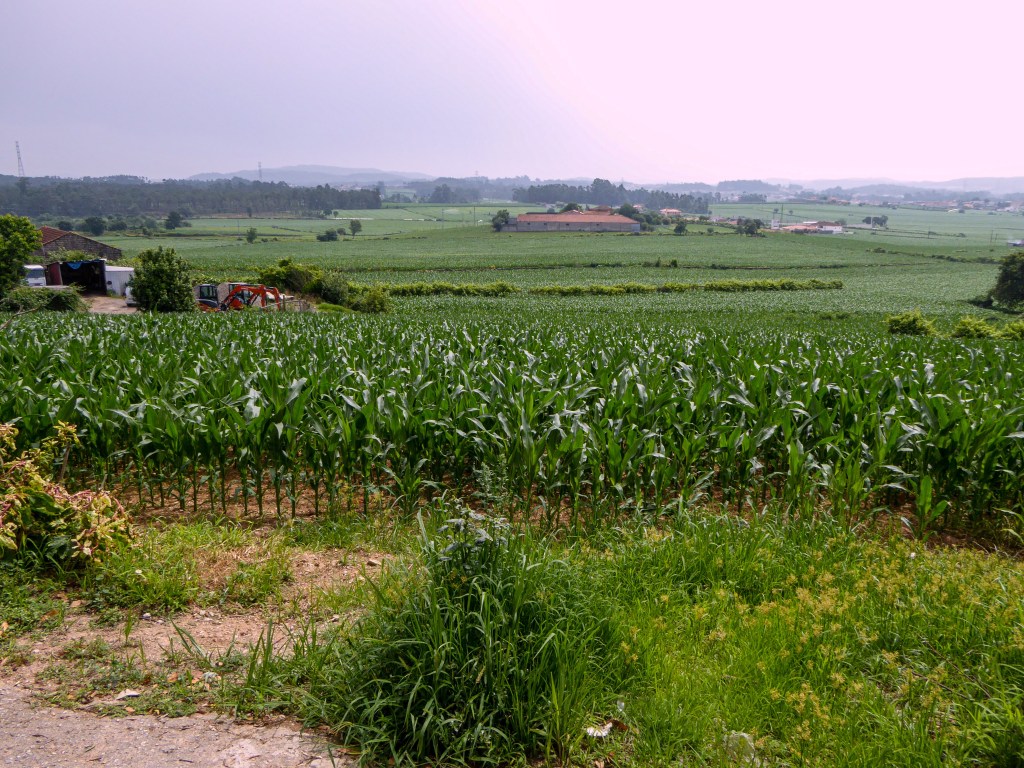
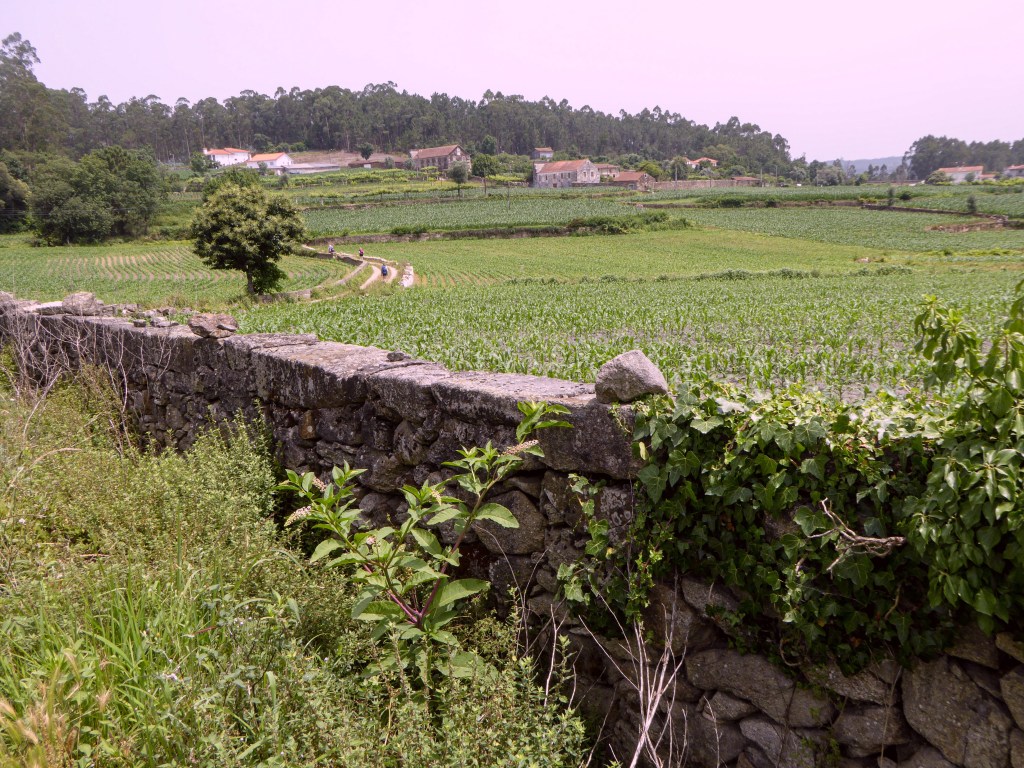
Long 34 km heading towards the sea. Mainly through Galician farmlands, countryside, and hamlets. Fortunately, a good breeze was blowing from the ocean to the north and kept us cool.
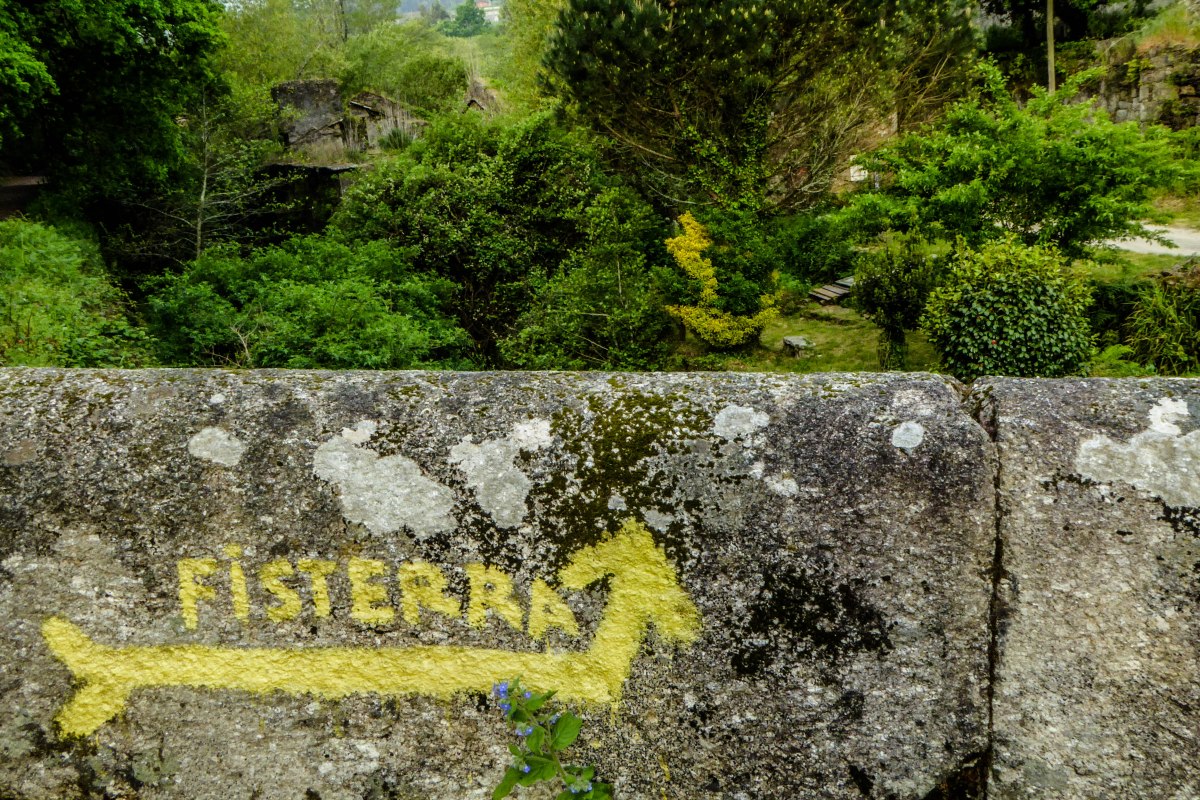
Santiago de Compostela was actually our penultimate destination on this trip. We are hiking about 90 more kilometers to what the pre-Columbian world believed was the end of the flat earth, or, as they wrote in Latin, Finis Terre. This is now known as the city of Finisterre, which will be our last stop by foot. 22km today through beautiful Galician countryside.

















 TrekTok